
Privacy vs. Prevention: Can the Government Use Your Car’s "Driver Monitoring" Data Against You?
Aug. 6, 2026
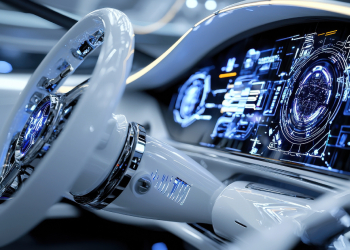 Modern vehicles are no longer just mechanical modes of transportation; they are highly advanced data centers on wheels. Features like internal infrared cameras, steering wheel sensors, and eye-tracking technology are marketed as critical safety measures designed to prevent distracted or drowsy driving.
However, discovering that your vehicle has been quietly logging your physiological reactions, facial movements, and attention lapses can cause an immediate sense of unease.
It is incredibly jarring to realize that a technology meant to keep you safe could easily be transformed into a digital eye witness for law enforcement, turning your private cabin into an interrogation room without your knowledge or explicit consent.
The growing friction between public safety initiatives and individual constitutional privacy rights is rapidly reshaping how state prosecutors handle modern traffic stops and accident investigations.
To help local motorists protect their personal lives from unwarranted government overreach, my firm, James B. Bennett Law Office, provides dedicated, strategic criminal defense advocacy throughout El Dorado, Arkansas, and all of South Arkansas.
Partnering with a seasoned legal representative guarantees that your constitutional protections are vigorously asserted and that unverified corporate metrics are not used to undermine your future. Reach out to me to schedule a comprehensive evaluation of your digital privacy options today.
Transforming Vehicle Safety Sensors Into Prosecution Evidence
The internal sensors built into modern cabins are highly sensitive mechanisms that monitor everything from your blink rate to the specific position of your head. When a severe collision or sudden traffic infraction occurs, state investigators no longer rely solely on skid marks or witness accounts; they immediately seek access to digital memory chips.
In criminal defense, understanding how raw technical telemetry translates into a criminal charge is vital to building an effective defense strategy. Prosecutors love to present digital metrics to a jury because computer data appears completely objective and irrefutable on the surface.
State prosecutors routinely seek out specific categories of driver monitoring data to build a narrative of driver distraction or impairment during a serious trial:
Infrared eye tracking timestamps: Records showing the exact direction of a driver's gaze and how many seconds their eyes strayed from the direct roadway centerline.
Micro-correction steering wheel logs: Diagnostic reports measuring how often a driver made sudden, erratic adjustments to stay within a designated lane.
Cabin audio and voice recordings: Saved vocal files captured by infotainment systems immediately preceding an incident to establish a driver's cognitive state.
Exposing the technical flaws in how these data streams are compiled allows your defense to challenge the state's narrative before a jury can be misled by automated conclusions.
An experienced criminal defense lawyer can demonstrate that an eye-tracker's alert might have been triggered by a simple glance at a side mirror or a natural glare from the afternoon sun rather than actual criminal distraction.
Stripping away the false infallibility of these digital systems prevents the prosecution from using unverified machine data to secure a conviction. This critical evaluation shows why a deep dive into the vehicle’s specific software configuration is an absolute necessity for modern case preparation.
Exposing the Unreliability of Driver Monitoring Algorithms
The artificial intelligence programs integrated into modern vehicle safety packages are far from perfect, as they rely on generalized algorithms that frequently misinterpret normal human behavior.
Confronting these systemic software failures requires a defense strategy that highlights the difference between machine algorithms and real-world human behavior. In the arena of criminal defense, exposing these programming limitations prevents a jury from accepting a vehicle's error log as absolute truth.
I work with technical consultants to dissect the specific source code and sensor limits of your vehicle, illustrating how easily environmental factors can trigger false positive alerts.
Investigating these software anomalies involves looking closely at several common variables that can cause a vehicle's safety system to generate inaccurate reports:
Inadequate facial mapping baselines: The internal camera failed to calibrate correctly to a driver's unique facial structure, misinterpreting a head tilt as drowsiness.
Environmental lighting interference patterns: Severe cabin shadows, passing streetlights, or sudden sunset glares blinding the infrared sensors and creating false distraction logs.
Polarized eyewear blocking capability: High-end sunglasses disrupting the camera’s ability to track pupil dilation, leading the software to assume a driver's eyes were closed.
Bringing these technical limitations to light shifts the trial's focus away from your character and onto the fundamental unreliability of the vehicle's internal software.
When a judge and jury realize that a vehicle's computer can log a false alert from something as simple as a driver changing the air conditioning settings, the state's primary evidence loses its sting. This aggressive deconstruction ensures that your future is never compromised by an unverified automated computer report.
Finding Reassurance and Security Through Attentive Legal Care
Facing criminal charges based on complex technological readouts and corporate vehicle data logs can leave you feeling completely outmatched by the vast investigative resources of the state. It is easy to feel overwhelmed when prosecutors try to use your own vehicle’s safety features to build a case against you, making it seem like your right to privacy has been completely erased.
However, the law still protects individuals from digital intrusion, and an automated computer script can never replace the true context of what actually occurred on the road. You do not have to allow unverified machine data or aggressive police overreach to dictate the outcome of your legal situation or strip you of your freedom.
At James B. Bennett Law Office, I stand ready to dissect the state's technical arguments, challenge unlawful data seizures, and provide a strong, protective shield for your constitutional rights.
I deliver personalized, aggressive representation to individuals throughout El Dorado, Arkansas, and all of South Arkansas. Reach out to my firm today to schedule your private consultation and secure the focused criminal defense support you need to protect your privacy and clear your name.